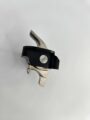

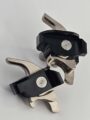
Description
ACRD15 — Active Cam Reset Device
VoidSpec Precision Components
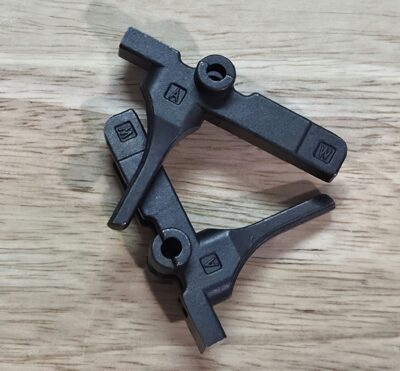
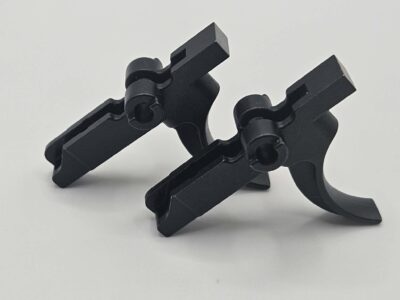
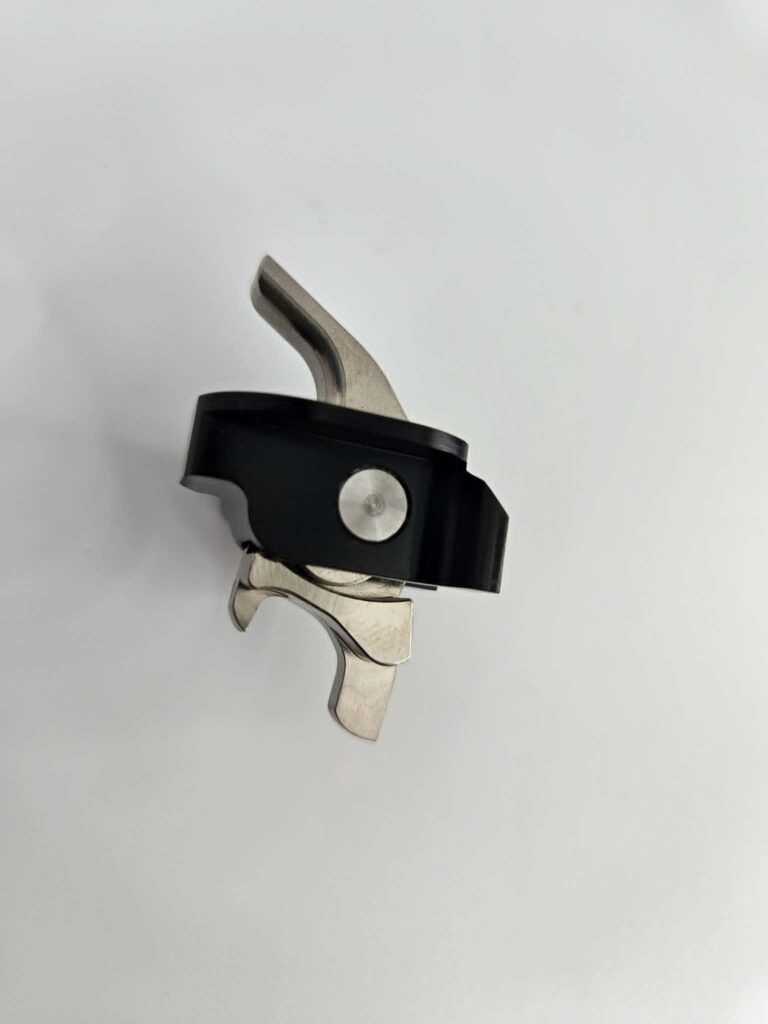
The ACRD15 began with the open-source Kabuto platform and re-engineered it from the ground up into a refined, production-built active reset device. It’s a four-piece module that installs into a standard AR-15 lower with no machining, no filing, and no fitting. The mechanism is designed so that every round requires a discrete, mechanical trigger reset — the bolt has to travel fully into battery before the next shot can break.
The design brief
Starting from the open-source Kabuto design, the ACRD15 was built around a different question: what’s the smallest, simplest mechanism that runs reliably across mil-spec lowers without anyone touching a file — and without making the customer rip out their existing fire control group? Most “drop-in” active reset products aren’t really drop-in. They want a specific selector geometry, a specific trigger pocket, and frequently a gunsmith with a Dremel.
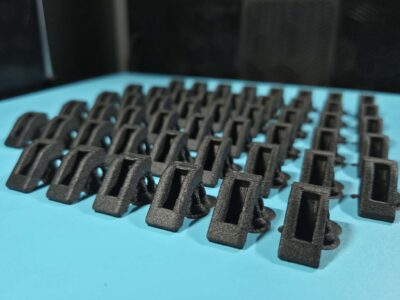
The answer came in at four parts. The housing is CNC-machined from 7075-T6 billet aluminum. The lever and actuator are CNC-cut from D2 tool steel and nickel-plated for surface hardness and corrosion resistance — D2 holds an edge under the kind of repeated impact loading these parts see, and the plating keeps that surface intact through thousands of cycles. Everything in the assembly is CNC-produced, so unit-to-unit consistency is a function of the machine, not the operator.
How the lockout works
When you break a shot, the bolt carrier travels rearward and the underside of a full-auto profile carrier rides over the reset lever. The lever drives the actuator, the actuator forces the trigger forward into a hard reset, and the trigger is then mechanically locked out. It physically cannot move rearward again until the carrier has returned fully into battery and the disconnector hands the hammer back to the sear.
The mechanism is incapable of releasing the hammer while the bolt is out of battery — that’s an enforced property of the geometry, not a software setting or a calibration that can drift. One pull, one round, by design.
With sustained rearward pressure, the next shot breaks the moment the bolt locks into battery.
What your build needs
The ACRD15 is designed around standard mil-spec AR-15 geometry and works with KAK-pattern 90° safety selectors in either two or three positions, with M16 3 position safety selectors, and with Geissele triggers when those are paired with the Geissele Over Travel Device. Your existing trigger group stays in the rifle — mil-spec, single-stage, or M16 FCG, the ACRD15 doesn’t care which one is sitting underneath it.
The one non-negotiable is the bolt carrier group. The ACRD15 reads its cycle from the underside of a full-auto profile carrier — a semi-auto profile carrier doesn’t have the geometry to engage the reset lever and the system will not cycle without it. If your rifle is currently running a semi BCG, plan to swap it.
If your lower or build sits outside a typical mil-spec configuration, send a message before you order. Catching a fitment question up front is faster than fighting one at the bench.
Specifications
| Platform | AR-15, mil-spec |
|---|---|
| Housing | 7075-T6 aluminum, CNC-machined |
| Lever and actuator | D2 tool steel, CNC-cut, nickel-plated |
| BCG requirement | Full-auto profile |
| Receiver modification | None |
| Existing FCG | Retained |
Installation
The ACRD15 doesn’t replace anything in your fire control group — your trigger, hammer, and disconnector all stay exactly where they are. The module drops into the open space above the safety selector and behind the hammer, seats against the existing geometry, and you’re done. No pins to punch, no FCG components to remove, no orientation puzzles. If the rifle was running before, it’s running with the ACRD15 in it after.
Legal responsibility
It is the buyer’s responsibility to verify that this component is legal to own, install, and use in their jurisdiction. Active reset and similar rapid-cycling trigger systems have been the subject of ongoing federal and state legal action; the regulatory status has shifted multiple times in recent years and continues to evolve. Several states restrict or prohibit these systems outright.
VoidSpec does not provide legal advice. If there is any doubt about whether this part is appropriate for your jurisdiction or your specific situation, consult a firearms attorney in your state before purchasing.