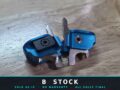
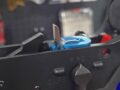
Description
B-Stock ACRD15LS — Active Cam Reset Device, Lever Stop
VoidSpec Precision Components
Read this section before you buy. These are ACRD15LS units that did not pass our final dimensional inspection. The mechanism, the materials, and the machining are the same as our full-price units — what these failed on is pin fitment, which measured looser than the tolerance we hold for A-stock. In most lowers that difference is not something you will notice. In some, it means the module needs minor fitting to seat the way it should.
B-stock is sold as-is, with no warranty and all sales final. No returns, no exchanges, no defect coverage, and no RMA. If you want a unit backed by our standard warranty, buy the regular ACRD15LS instead — this listing exists so the as-is terms stay off that product, not as a cheaper way to get the same guarantee.
This is a part for someone comfortable checking fitment and function on their own build. If that is not you, this is not the listing for you.
What you are actually getting
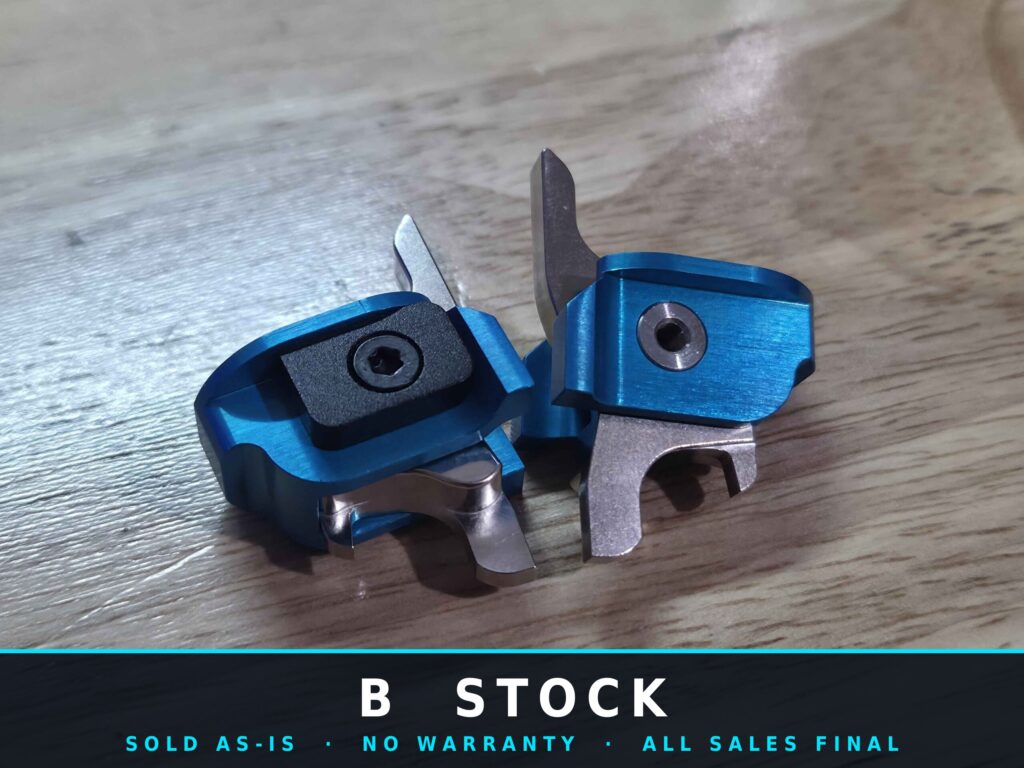
The ACRD15LS is the ACRD15 with the over-travel problem solved in the part itself. It carries an integrated lever stop, so there is no separate over-travel device to buy, install, or tune — including on Geissele triggers, which previously required one. It ships with shims for the M16 pocket. Same core mechanism as the ACRD15: installs into a standard AR-15 lower with no machining, and every round requires a discrete, mechanical trigger reset.
Nothing about the design is different in a B-stock unit. The housing came off the same machine, out of the same material, and the lever and actuator are the same D2 tool steel. What is different is that this particular unit measured outside our spec on final inspection and we will not sell it as a first-quality part.
Fitting
M16 lowers already vary in the fire control pocket, which is why every ACRD15LS ships with shims. On a B-stock unit that variation stacks with a pin fitment that is already looser than spec, so the shims are doing more work than they would on an A-stock part.
Expect to spend time on fitment that you would not spend on a full-price unit. In practice that means seating the module, checking how it sits, adding shims to take up slack, and repeating until the fit is correct. On some lowers it will drop in and be done. On others it will take a few passes.
What minor fitting does not mean: material removal. If a unit will not seat correctly with shimming, stop. Do not file, sand, grind, or otherwise cut on the module or the receiver to force a fit. A part that has to be modified to go in is a part that should not be used, and modifying it is on you — there is no warranty to fall back on and no returns.
How the lockout works
When you break a shot, the bolt carrier travels rearward and the underside of a full-auto profile carrier rides over the reset lever. The lever drives the actuator, the actuator forces the trigger forward into a hard reset, and the trigger is then mechanically locked out. It physically cannot move rearward again until the carrier has returned fully into battery and the disconnector hands the hammer back to the sear.
The mechanism is incapable of releasing the hammer while the bolt is out of battery — that is an enforced property of the geometry, not a software setting or a calibration that can drift. One pull, one round, by design.
With sustained rearward pressure, the next shot breaks the moment the bolt locks into battery.
Build
The housing is CNC-machined from 7075-T6 billet aluminum. The lever and actuator are CNC-cut from D2 tool steel and nickel-plated for surface hardness and corrosion resistance — D2 holds an edge under the kind of repeated impact loading these parts see, and the plating keeps that surface intact through thousands of cycles.
What your build needs
The ACRD15LS is designed around standard mil-spec AR-15 geometry and works with KAK-pattern 90° safety selectors in either two or three positions and with M16 3 position safety selectors. It is not compatible with 45-degree (short-throw) selectors. Geissele triggers run directly — no over-travel device required.
The trigger needs to be mil-spec style. The hammer does not — unlike the standard ACRD15, the LS carries no mil-spec hammer requirement, so aftermarket and speed hammers are fair game. Your existing trigger group stays in the rifle either way.
The one non-negotiable is the bolt carrier group. The ACRD15LS reads its cycle from the underside of a full-auto profile carrier — a semi-auto profile carrier does not have the geometry to engage the reset lever and the system will not cycle without it. If your rifle is currently running a semi BCG, plan to swap it.
A build that already sits outside typical mil-spec configuration is a poor candidate for a B-stock unit. The looser fitment and a non-standard lower stack against each other, and there is no warranty here to absorb the outcome. Buy an A-stock unit for that build.
Specifications
| Condition | B-stock — failed final dimensional inspection (pin fitment) |
|---|---|
| Warranty | None — sold as-is, all sales final |
| Fitting | May require minor fitting; varies by lower |
| Platform | AR-15, mil-spec |
| Housing | 7075-T6 aluminum, CNC-machined |
| Lever and actuator | D2 tool steel, CNC-cut, nickel-plated |
| Lever stop | Integrated — no over-travel device required |
| Trigger | Mil-spec style |
| Hammer | No mil-spec requirement |
| Safety selectors | Mil-spec 2-position, M16 3-position — not 45° short-throw |
| Included | M16 pocket shims |
| BCG requirement | Full-auto profile |
| Receiver modification | None |
| Existing FCG | Retained |
Installation
The ACRD15LS does not replace anything in your fire control group — your trigger, hammer, and disconnector all stay exactly where they are. The module drops into the open space above the safety selector and behind the hammer and seats against the existing geometry. No pins to punch, no FCG components to remove.
On a B-stock unit, plan on shimming. Seat the module, check the fit, add shims to take up pocket variation and slack, and work it until the module sits without play. Take the time here — a module that is not seated correctly will not behave correctly.
Check function before you load it
Do this on every build, and do it carefully on a B-stock unit. With the rifle completely unloaded, magazine out, chamber visually and physically clear:
Confirm the safety functions in every position. Confirm the trigger resets fully. Cycle the action by hand and confirm the hammer cannot release while the bolt is out of battery. Confirm the module has no movement once seated.
If any of those checks fail, or if anything in the trigger group feels inconsistent from one cycle to the next, stop and do not fire the rifle. Remove the module. If you are not certain what you are looking at, have a qualified gunsmith check it.
B-stock terms
Sold as-is with no warranty of any kind, express or implied, including any implied warranty of merchantability or fitness for a particular purpose. All sales are final. No returns, no exchanges, no refunds, and no defect coverage. B-stock units are excluded from our standard RMA policy.
You are buying a unit that we have told you is out of spec, at a price that reflects it. Fitment, installation, function checking, and the decision to put the part into service are your responsibility.
Legal responsibility
It is the buyer’s responsibility to verify that this component is legal to own, install, and use in their jurisdiction. Active reset and similar rapid-cycling trigger systems have been the subject of ongoing federal and state legal action; the regulatory status has shifted multiple times in recent years and continues to evolve. Several states restrict or prohibit these systems outright.
VoidSpec does not provide legal advice. If there is any doubt about whether this part is appropriate for your jurisdiction or your specific situation, consult a firearms attorney in your state before purchasing.